
Learning how to become an AI trainer is simpler than most people expect. There is no degree requirement, no coding test for most roles, and no waiting years to break into the field. If you have strong written English and enough attention to detail to follow a task guideline closely, you can realistically go from application to your first paid task within two to three weeks. Here is exactly how.
This guide is the practical, step-by-step companion to our broader breakdown of what an AI trainer actually does. If you are still deciding whether the role fits you, start there. If you already know you want in, keep reading.
Step 1: Understand What You Are Actually Signing Up For
Before applying anywhere, it helps to know what a typical day looks like. AI trainers evaluate AI-generated responses for accuracy and quality, write sample answers that models learn from, and flag errors in AI outputs. This work involves reading, judging, and writing far more than it involves anything technical. It falls under natural language processing, the branch of AI concerned with how machines understand and generate human language, though you do not need to know that term to do the job well.
Furthermore, most platforms pay hourly rather than per task, and task availability can fluctuate week to week. Going in with realistic expectations about income consistency will save you frustration later.
Step 2: Choose a Specialization Before You Apply
You will get better results applying with a specific track in mind rather than a general “I’ll take anything” approach:
- General writing and evaluation. The most accessible entry point. No specific background required beyond strong written English.
- Coding. If you have programming experience in any language, coding evaluation tracks pay significantly more, typically $25 to $50 per hour.
- Math and STEM. A dedicated track on several platforms for anyone with a math, physics, or engineering background.
- Domain expertise. Medicine, law, and finance professionals can often skip the general queue entirely and go straight into higher-paying specialist evaluation work.
Importantly, you can apply to more than one track over time, but picking your strongest one first increases your odds of passing the initial assessment.
Step 3: Pick Your Platforms
Rather than applying to one platform and waiting, most successful AI trainers apply to two or three at once. The major platforms include DataAnnotation.tech, Outlier AI, Mercor, and Remotasks, each with slightly different task types and pay structures. See our full reviews of DataAnnotation.tech, Outlier AI, and Mercor to compare them directly.
Rather than checking each site individually, you can browse current openings across the ecosystem in one place at Talents for AI.
Step 4: Create Your Profile
Sign-up is usually the fastest step, generally five to ten minutes. You will provide your background, language skills, and areas of expertise. Be specific here. Vague profiles get filtered into general queues, while detailed ones, especially mentioning specific software, subject areas, or writing experience, tend to get matched to better-paying task types faster.
Step 5: Pass the Skills Assessment
This is the step where a meaningful share of applicants drop off, so it is worth preparing for rather than rushing through. Depending on your track, expect one of the following:
- A writing sample testing clarity, grammar, and how well you follow detailed instructions.
- A short evaluation task where you rate or rank sample AI responses against a rubric.
- A coding test in your stated programming language, if applying to a technical track.
- A domain knowledge check, for medical, legal, or finance applicants.
Moreover, the single most common reason applicants fail is not lack of skill, it is not following the instructions closely enough. Read every guideline twice before submitting. Assessors are specifically looking for whether you can apply a rubric consistently, not just whether you are a good writer.
Step 6: Complete Onboarding Tasks
Once you pass the assessment, most platforms run a short onboarding period, a small set of guided tasks used to calibrate your understanding of quality expectations before the full task board unlocks. Treat these seriously too. Your performance here often determines what task types you get access to going forward.
Step 7: Start Working and Build Your Track Record
Once approved, you access available tasks and can generally start immediately. From here, consistency matters more than speed. Platforms track quality scores over time, and contractors who apply guidelines the same way every task tend to get access to more, and better-paying, work.
Additionally, if you have not received task access within one to three weeks of finishing an assessment, you likely did not pass for that particular role. Most platforms do not send a formal rejection notice, so it is generally fine to apply again for a different track or a different platform.
How Long Does the Whole Process Take?

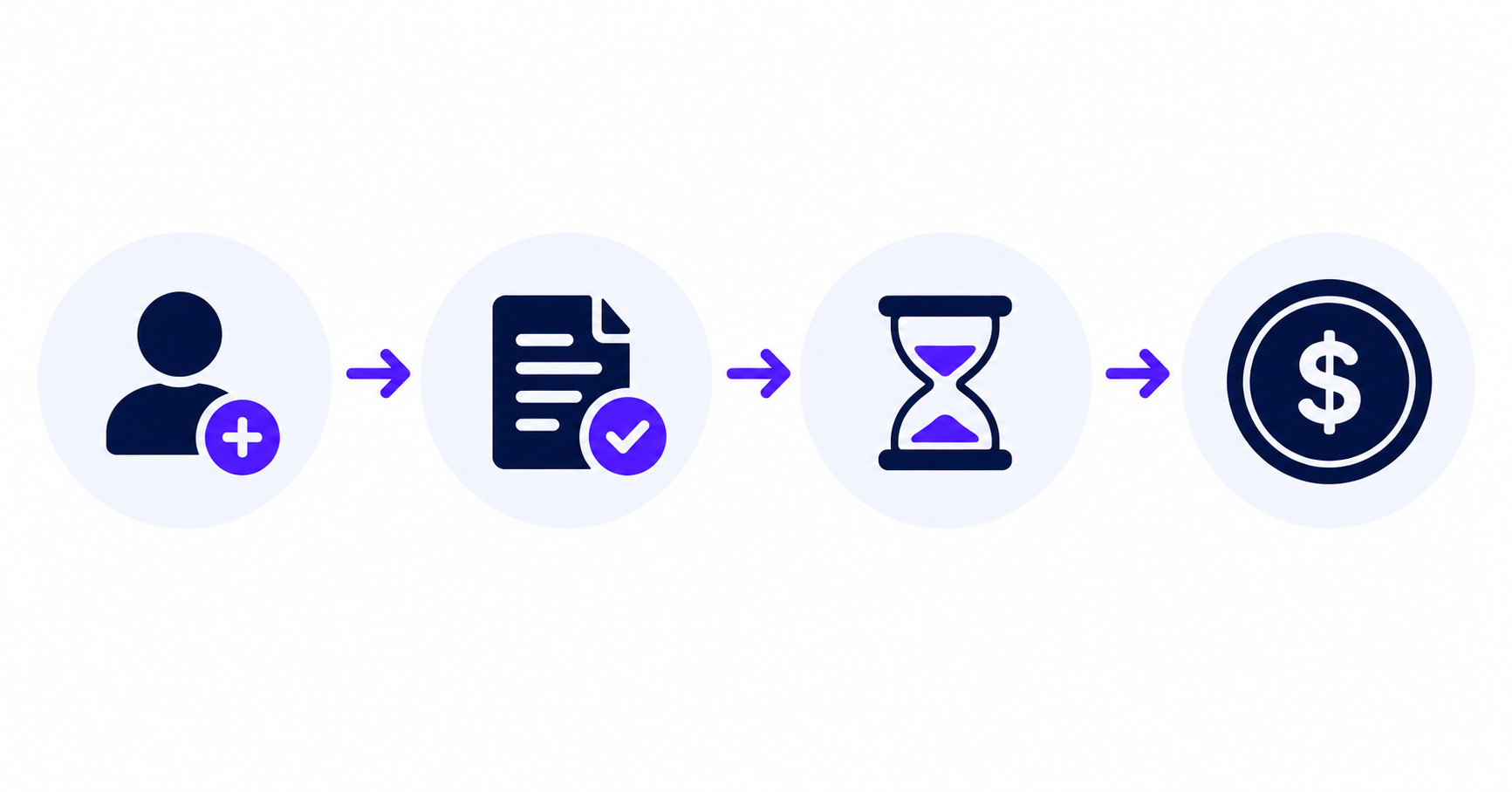
In practice, most people move through this timeline:
- Sign-up and application: 5 to 10 minutes.
- Skills assessment: 30 minutes to a few hours, depending on the track.
- Waiting for approval: A few days to two weeks.
- Onboarding to first paid task: Usually within a week of approval.
End to end, two to three weeks from starting your application to earning your first paycheck is a realistic expectation.
Common Mistakes to Avoid
- Applying to only one platform. Task supply varies, and having a second platform approved gives you somewhere to turn when one goes quiet.
- Skimming the assessment instructions. Most failed assessments come down to not following the rubric precisely, not a lack of ability.
- Treating it as a guaranteed full-time income from day one. Task availability fluctuates, so plan around it as flexible income, especially at first.
- Ignoring your strongest specialization. Applying to the general queue when you actually have coding or domain expertise leaves money on the table.
Frequently Asked Questions
Do you need coding skills to become an AI trainer?
No. Most AI trainer roles involve writing and evaluation tasks that require no coding at all. However, coding evaluation tracks pay significantly more, typically $25 to $50 per hour, so programming skills expand your options considerably.
Can you become an AI trainer part-time?
Yes. Nearly all AI trainer roles have no minimum hour requirements. You accept tasks when they are available and when your schedule allows, which is why most contractors treat this work as supplemental income rather than a full-time replacement, at least initially.
How long does the application process take?
Sign-up typically takes five to ten minutes. The skills assessment that follows can take anywhere from 30 minutes to a few hours depending on the platform and role. Access to paid tasks usually follows within one to three weeks of a successful assessment.
What countries are eligible to become an AI trainer?
Most roles accept worldwide applicants. Payment is processed via Deel (160+ countries) or Stripe (46 countries). Sanctioned countries including Russia, Iran, North Korea, and Belarus are not eligible.
What equipment do you need to become an AI trainer?
A laptop or desktop computer with a stable internet connection. Assessments and task work cannot be completed on mobile phones.